Hello Internet!

From Papyrus Pyro To Tigris Tides
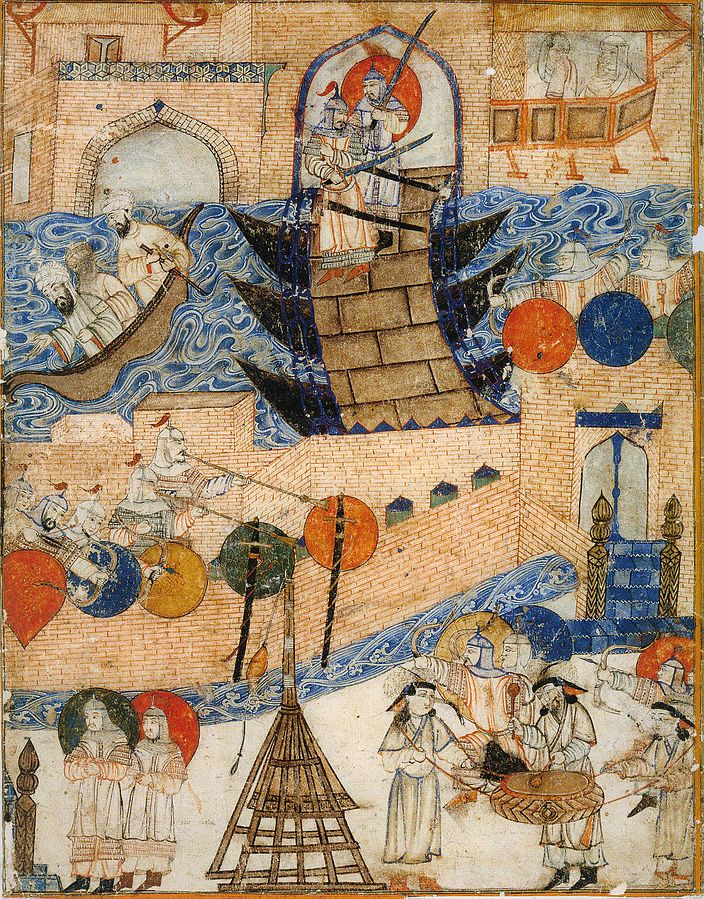
Throughout the recorded history, the main means of registering the accumulated knowledge and establishing communication between humans were books and papers. Like other material forms, these media are subject to decay and destruction. The sorrowful stories of the burning of the library of Alexandria and the destruction of the House of Wisdom (in which the Tigris river turned black from inks of the thrown-out books) have made us contemplate on the volatility of our knowledge-preservation tools and strive for optimizing our methods. One could only imagine the advances of human civilization, from the reach of our spacecrafts to the cures of diseases, if the accumulated experiences of generations had not been essentially reset throughout the centuries.

Micro-chips and Micro-blogs
The widespread adoption of the internet and personal computing devices have made it much easier to broadcast ideas and to get in touch with fellow scholars. In recent years, the advent of social media platforms has essentially removed the technological barrier-to-entry of broadcasting one’s thoughts and ideas.
I think that “ephemeral micro-blogging” or “like-dislike-based image galleries” alone could not do justice to the plan of improving our means of communication. There are also all sorts of problems associated with the centralized form of information propagation like exclusive control over the flow, becoming the echo-chamber of a hive-mind, and being a single point of failure in a technical sense.
I believe that there are more opportunities to be gained utilizing independent websites on the internet so I have decided to start this website as “My Homepage” to publish my thoughts.
Regaining Control
I’ve always wanted to maintain my personal blog/website. I was dabbling in web-dev stacks here and there so I knew there should be some abstractions and complexity between actual raw content and the final served webpages, the process which includes server-side programming languages, a myriad of tools, and the constant mental load of keeping the stack updated to remedy security concerns. Initially, I planned to do it years ago via WordPress but somehow didn’t get the time to do so. Hopefully, there was another way!
The story began when I found Prof. Stephan Boyd’s homepage while browsing his course webpages. The elegance and simplicity of his homepage design sparkled my interest in maintaining a homepage of my own once again.
What is Old is New Again
Behold the concept of “Static Site Generator (SSG)“s that could directly output a whole static website out of raw contents formatted in a neat and readable way called “Markdown”. Essentially the whole process of “launching a website” boils down into:
1. Writing the contents via markdown in an editor (like vim, VSCode or Emacs)
2. Invoking the SSG’s CLI tool
and that’s it! The SSG generates all HTML/CSS/js needed for a fully functional, modern, and good-looking static website. Grated that it does not have the features of a dynamic one like accounts, comments, or an integrated CMS but some of them could be set-up via 3rd party services.
This is similar to the way static websites were designed in old times when the developer wrote the HTML/CSS directly. After all, HTML (Hypertext Markup Language) is also a markup language similar to Markdown. The difference is that Markdown trades complexity for simplicity so it is readable even in its raw form.
So I delved into the world of SSGs starting with the original jemdoc (which Boyd’s homepage was generated with), then I found out that Ruby-based Jekyll is a popular SSG. Then again I thought that googling “comparing static site gens” wouldn’t harm. That search led me to the Go-based Hugo which advertised itself as a fast SSG with lots of features for people with similar interests to mine. Currently, I’m using the Academic theme which supports LaTeX, diagrams, syntax-highlighting, and many other nifty features making the whole write-to-publish process nicer.
If those tragic events mentioned at the beginning of this article have thought us anything, it is the fact that we should make our means of recording knowledge and communication as robust as possible. Among the advantages of this “markdown-based static website” approach as opposed to the CMS-based WordPress, is that all raw contents could be version-controllable (like via git), migration to another SSG (looking at you, Zola!) is easy and contents could effortlessly be converted to pdf in order to be printed physically in case the microchips get bricked for some reason!